It’s My Urban Garden Respite, Now Get Off of My Lawn!!!

Living in the craziness of San Francisco, you need a quiet space to chill out, unwind and find your inner peace. There’s only so many hipsters, hippies, and dot-com millionaires one can take in a day on top of everything else that’s going on in the world.  It’s hard to find that space inside your home in San Francisco because the luxury of space isn’t readily available at a $1,000 per square foot.  So you tend to look for some respite outside of your house cubicle.

Of course, that’s not so easy here either.   Cafes and coffee houses are filled with the same hipsters who use them as their rent-free office space, writing their own blogs, I suppose.  Parks are often filled with homeless camping or dot-com millionaire kids on play-dates and in SUV baby carriages.  Going for a walk can be nice, unless you don’t feel like hiking back up the 1,000 foot hill with a sidewalk that consists of a 4-block staircase.  Because land is at a premium on the 7 mile x 7 mile peninsula that constitutes San Francisco, not many homes have much of a yard here.

We fortunately do, and it’s one of the places where I try to find some respite when things are crazy. I spent a couple of years taking landscape architecture classes which gave me a lot of ideas, much less so the practical skills to actually implement them.  But I try.  I’ve created different outdoor rooms, on different levels to deal with the sloping hill terrain; and built a river-rock stream to connect different spaces. There’s two outdoor eating areas, one for the sun, the other more shade, and another small conversation area with a fire-pit in the center.  We’ve built raised garden beds with strawberries, tomatoes, peppers, herbs, and lettuce.  I turned a couple of galvanized metal water troughs into additional growing areas for snap peas and raspberries.  It is accented with multiple flower pots at key spots for a burst of color.  We’re surrounded by an amazing number of trees for a small city lot including Japanese maple, palms, gingka, lemon, and apple. There are monarch butterflies galore, flocks of hummingbirds, even our friendly, adopted neighborhood cat named Bubba – who should really pay rent for his deck space with the city views.

Some of my favorite moments with Joe are sharing lunch together on a sunny day in the middle of our little urban oasis.  There is no cafe or park that would come close. It’s just us in a private urban paradise.  It’s got a few weeds, and often looks short on the maintenance, but it never fails to refresh the soul and my spirits. Just stay off of my lawn.

This slideshow requires JavaScript.

Ninety-niners

One percent of our population constitutes the plutocracy in this country who control Wall Street investment firms, the banks, the mortgage industry, the insurance industry, and other major global corporations. They buy influence in Washington through the auction-house called Congress.

Over a few decades, the mega-wealthy have managed to stack the deck in their favor through successive bits of legislation, litigation, changes to regulatory practices and the tax code. This manipulation has resulted in the distribution of income in the US becoming  lopsided in their favor, the most inequitable since 1928, just before the Great Depression. (Ref: Economic Policy Institute, Analysis of CBO Data).   Because of the deregulated environment constructed via their influence, they were able to create a financial house of cards, take as much as they could reap from it; and then – when it collapsed, come back to the Federal trough to get bailed out. All while being praised as job creators.

What a business model: use the baby boomers mega savings in 401K accounts as the capital to fuel it, privatize the mega-profits, democratize the losses;  and oh, by the way – too bad for the boomers retirement savings screwed over in the process.

The result of all this is that today we live in a society made for them, not for us.  It’s their world, not ours. If we’re lucky, they’ll let us work in it so long as we don’t question the extent of their charity.  But if something doesn’t pass muster with this elite “virtual plutocratic senate”, it either isn’t going to happen, or it will be shut down through divisive tactics, manipulation, or unfavorable attributions like a “mob action”, “un-American”, “class-warfare”.  Sound familiar?

But the other 99 percent in this country has finally decided that it will no longer be silent.  As I first wrote here on September 25, a small group began to assemble on Wall Street to let the 1 percent know just how frustrated they are with living in a world made for someone else.  It was started largely by our disenfranchised youth, always an early warning indicator that trouble may brew ahead.  Look at Egypt with a youth-unemployment rate at about 25%, on par with the rest of the Middle East and Northern African (MENA) countries where we have witnessed the Arab Spring.  In the West, Britain has a youth unemployment rate of 20% and Spain is on the order of 40%. (Source: The Economist, Schumpeter Business & Management, February 2011)  The US is in the same league, so don’t let American hubris cause you to think we’re any different.  Arab Spring, American Autumn.  

The Occupy Wall Street movement (can we call them the “Z” party – based on their Zuccotti Park home base?) has grown and continues to do so. “We are the 99 percent” is the creed, and every city is sprouting its own rendition – Occupy SF Occupy Omaha, Charlotte, Los Angeles, etc.  What was three weeks ago a group of mostly young people camping out on the streets has morphed into something different: a movement for people of varying ages, life situations and grievances.  Unions of teachers, transportation workers, manufacturing occupations and nurses are joining in.  Baby boomers are joining too, while trying to reconcile how we’ve gone full circle from hippie movements of the 1960s and ’70s to “Zippie” movements forty years later.

The common denominator is that the majority in America — the “99 percent”, isn’t getting a fair shake.  The 99 percent is not a “mob”, “un-American”, or a radical group of misfits. It is us, just looking for a fair shake.  We, the NQR generation, should realize this more than anyone because we have experienced a better America.  We have every reason to get involved and drive change.  It’s the right thing to do. 

Economic Policy Institute

https://i0.wp.com/www.stateofworkingamerica.org/files/images/orig/Family-Income_Household-income-growth_income-group_pre--and-post-tax_3.png

International Escape

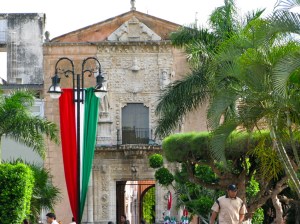
I first went to Mérida, Yucatán México 35 years ago on a bus from Tehuacán, Puebla – during the time I was an exchange student in high school.  Captivated by the colonial city, Mayan history, and nearby beaches with a series of quintessential fishing villages, I didn’t want to leave.  But college beckoned in New York, then onto an MBA, and soon, a 30-year career ensued. I retained the dream of having a home in México someday.

Then in 2007, I started to explore the possibilities of retiring abroad – at least on a part-time basis – to enjoy a slower pace of life, different experiences; and not least of all, help offset the financial requirements of retiring sooner or pursuing Career 2.0.

I checked out Costa Rica, Panama, Uruguay, Argentina, Brazil, and a few other places too.  International Living (www.internationalliving.com) became an on-line fascination.  When I was staying in Bocas del Toro (Panama), I read a book called Don’t Kill the Cow Too Quick: An Englishman’s Adventures Homesteading in Panama”, by Malcolm Henderson.  The book captures the essence of the adventure that awaits in moving abroad, and motivated me to delve further.

Explore the Web, and you’ll find a whole industry devoted to retirees looking to live under tropical skies with daily maid service, affordable healthcare, houses and apartments at the beach, in colonial cities, or quaint mountain towns.

The U.S. State Department estimates some 4 million Americans live abroad, not counting military and embassy personnel, with 500,000 to 1 million just south of the border in Mexico alone. About a quarter of those are estimated to be retirees.

From a financial perspective, spending time overseas is certainly tantalizing.  The cost of living can be low enough to retire years earlier than otherwise possible.  We know people in Mexico who live very well on $2,000 USD per month, and others who make it work with less because they’re willing to forego imported goods and adopt a simpler lifestyle.

From my experience living/working abroad I’d say that if you’re the kind of person who is motivated just by the financial aspects, then retiring abroad probably isn’t the right thing to do. You need to be desirous of a different lifestyle, crave some adventure, and embrace the cultural variety. If you’re not open-minded, flexible, tolerant and patient, or have an attitude that “Amurka” does it best, then you probably shouldn’t even consider it.